




CDG 37 – Rommel in World War I, 1917
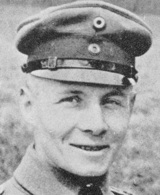 You, Lt. Erwin Rommel, have an assignment that might change the course of the Great War. It is August 10, 1917, and your Wurttemberg Mountain Battalion was recently transferred from the Vosges Mountains on the Western Front to the rugged Carpathian Mountains of Romania. You have been charged with capturing Mount Cosna, lynchpin of the Romanian defensive line. Success can open the way to the Romanian interior with its resources, particularly oil, that Germany sorely needs. Moreover, if the Romanians are knocked out of the war, Russia will have no ally in the East, and many thousands of German troops may be freed up for use on the stalemated Western Front.
Your battalion commander, Major Sproesser, has split your battalion into two abteilungen, or detachments, Abteilungen Rommel supported by Abteilungen Gossler.
{default}Abteilungen Rommel consists of four 220-man rifle companies armed with excellent Mauser M98 G rifles and Model 1917 Stielhandgranaten, stick-type fragmentation grenades. Additionally, you have a 60-man machine-gun company, its six platoons equipped with 7.92mm Maschinenewehr 08/15s, weapons that give them greater mobility than heavier machines guns do. Abteilungen Gossler is similarly armed and is comprised of two rifle and one MG companies plus attached infantry from the 18th Bavarian Reserve Infantry Division. Fire support consists of 76mm trench mortars and brigade-level field artillery.
Opposing you are several hundred men of the Romanian 7th Infantry Division, similarly armed and supported. You do not think they are the equals of your elite Alpenkorps in training, combat experience and morale, but they occupy in-depth trench lines with good fields of fire. The terrain you must cross is rugged, laced with ravines, and includes wooded patches and open fields.
You have devised three courses of action and must now choose one of them.
Course of Action One: LEFT HOOK
You will use one infantry company and all but one platoon of the machine-gun company, plus mortar and artillery fire, to fix the Romanians’ attention to the front of their positions while you lead three infantry companies and the remaining MG platoon around the enemy’s right flank to a wooded area near Piciorul. Simultaneously, Gossler will infiltrate the Romanians’ left by leading his detachment though the broken area south of the trenches to take up a position near Mount Costa. Your attack from Piciorul will shatter the demoralized enemy, and Gossler can sweep northward to capture Mount Cosna.
This plan requires Gossler to infiltrate without being detected; a Romanian counterattack might hit his flank while his men are spread out in the ravines.
Course of Action Two: FRONTAL ATTACK
Keep it simple: Make an all-out frontal assault supported by a rolling artillery barrage, the sort of action in which your men are very experienced. Their superior training, experience and morale will give them the advantages they need to overwhelm the Romanians. This is the shortest route to Mount Costa.
The risk, of course, is that you will be assaulting the Romanian position where it is strongest, and they will be able to bring maximum fire to bear.
Course of Action Three: DOUBLE ENVELOPMENT
Use both MG companies, minus one platoon each, to deliver massed fire along with an artillery and mortar barrage on the Romanian front, fixing the enemy in position. You’ll lead your troops around the Romanians’ north flank while Gossler does the same in the south, and the two groups will simultaneously hit the enemy from two directions, crushing them.
In this plan, two widely separated groups must coordinate their actions, and the machine-gun and high-explosive fire will have to be controlled with split-second timing. The two attacking units may also mistakenly fire on each other.
You have two hours to choose the best of these plans. Or is there yet another option?
Click here to download the pdf of Command Decision Game # 37, Rommel in World War I, 1917, and submit your solution.

I’m thinking COA 1 for this. If the other lieutenant is caught before his troops are ready, then he didn’t walk through the dense forest like he should have. Even if they were discovered before they intended to attack, any counterattack would not be properly reinforced, nor have time to develop if Rommel had already begun his attack from the other side. Then the combined attack of both Rommel and Gossler wouldn’t be held of by any force in Mt. Cosna
I am favouring COA 3. I like the fixing in place and double envelopment. The cordination may not be as great an issue since the two flank attacks need not be conducted simultaneously – its better if they are but sequencially works as well in dislocating the enemy. Assume that we have well trained troops by this time of the war and solid leadership – two veryimportant facts in overcoming friction.
Absolutely Brendon!!!
COA #2 is a death sentence. The last four years have proven that. COA #3 is overly optimistic. Rommel is good but he’s no Hannibal. COA #1 is similar to the tactics General Hutier is using in the West. Highly trained stormtroopers will infiltrate the enemy lines and bypass strong points. The untrained Romanian soldiers will be fixed bu the machine gun company and attacked from the flank
Concur that COA 2 is not the way to go. I support COA 3; the German Command has always been intrigued with Hannibal’s victory at Cannae and both Moltke the Elder and Schlieffen studied the battle – avoid frontal attacks and destroy the enemy flanks.
I would assume that their interest made its way into the German military education system and was familiar to officers. So executing a double envelopment should be within the realm of possibility.
In a way this problem reminds me of the portion of the Atlanta Campaign when Sherman enveloped Johnston’s positions with a few costly exceptions (Kennesaw Mountain).
I was surprised that the vignette gave a good review of the 08/15 Machine Gun – I had always thought 08/15 was German military slang for something mediocre and was the reason Hans Helmut Kirst titled his anti-war Gunner Asch Trilogy 08/15.
I seem to be the only one that actually supports COA#2. It seems counter-intuitive but by 1917 a walking barrage was the most reliable way of capturing a kilometer or two of enemy terrain -particularly with troops that are experienced in it. Granted, it was not a cheap way of taking terrain (significant ammunition cost and some human cost) , not a good way to capture large amounts of enemy troops and not particularly likely to achieve a breakthrough. However, given the importance of the objective (lynchpin of the Romanina defense as is said in the text), I believe such considerations are secondary. We should choose the method most likely to give us the position and let us keep it. That is COA#2 in my opinion.
Sensemaker
I would choose COA no.1. Further reconnaissance must be conducted to mark out the best infiltration routes to the lines of the departure for both detachments by using the geographical features as cover. There’s a danger of being attacked while maneuvering into attack positions but there’s always the element of risks in any operation. In this case, should one of the detachments be attacked, the other detachment may yet have a chance to capture the objective. The defending detachment can as ‘fix’ the attackers into place while the other attacks the objective. Fire support by the trench mortars and brigade level artillery can also be used to keep the Romanians in their positions whether the detachments are defending or attacking.
Hm, I was wrong. Probably because I put too much emphasis on the description of the larger (strategic and operational) situation. That made me conclude that I should chose the low risk choice, choosing most reliable, proven method -even if it meant higher casualties.
I do not presume for a moment to know better than the referees – I have almost always come to understand the rectitude of their answers in retrospect. Furthermore, from what I know, they are highly qualified people. Also, the historical outcome seems to indicate this.
However, I still do believe that my reasoning was not completely without merit. Rommel had the luck to avoid what was feared in COA#1 a counter-attack to the flank of the flanking force. Despite this luck, it was so close that he considered withdrawing. You could argue that he choose a high-risk high-gain tactic and had some luck. The strategic and operational situation (the way it was described in the text) would have called for a for a low-risk low-gain tactic. By 1917 this was advance behind rolling barrage.
Sensemaker
I’m just about to read the attack on COSNA (again) in Rommel’s “INFANTRY ATTACKS”- so I know the answer! But leaving that aside….trying to be objective…..my answer would be the DOUBLE ENVELOPMENT- COA#3? pin the Rumans with fire & do a CANNAE. These were some of best troops in GERMAN Army! Friendly fire possible,acceptable risk,but wouldn’t happen- NOT WITH THESE TROOPS! NB:- it’s 18th Bavarian Reserve REGIMENT not! Division(part of 15th Bav.Res.Brigade- along with 10th Bav.Res.Regt). Also- the part about “Rumanian oil” is wrong! 90% of Rumania had already fallen by this time,Rumania was hanging on(with Russian help) to eastern Moldavia- the rest of Romania having fallen to Germans,Austro-Hungarians,Bulgarians,& Turks in late 1916! Sorry to be a “kill joy” but those are the facts!