




ArmA II: Operation Arrowhead – PC Game Review
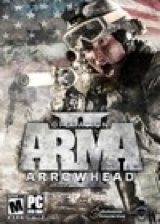 ArmA II: Operation Arrowhead. PC Game Review. Bohemia Interactive/Meridian 4. $39.99.
Passed Inspection. Stand-alone expansion; amazing visuals, even at lower detail levels. This is the closest you can get to a military-grade combined-arms virtual-combat simulation on the PC.
Failed Basic. Will crush the fastest machine available today at the maximum detail levels. Difficulty of missions sometimes overwhelming. AI can be too good a shot at times, but quite downright stupid at other times.
As close as you can get to a military-grade virtual combat simulation
ArmA II: Operation Arrowhead is a new stand-alone expansion pack for 2009’s ArmA II. The ArmA series is much like the BattleField series from EA, because it combines a first-person shooter with ground and air vehicles that players can man to create a complete virtual battlefield experience.
{default}The main difference is the ArmA series and even the original Operation Flashpoint were more simulations of combat from a FPS perspective (which also offers a 3rd person view) than a Call of Duty or Battlefield-like action/shooter experience. Even on the easiest setting in most Bohemia Interactive games, the difficulty at times can be frustrating. Like ArmA II, ArmA II: Operation Arrowhead is a sandbox game, giving players total freedom to roam about massive environments as they attempt to complete their mission objectives. There are also 300+ new units, weapons and vehicles included in Operation Arrowhead, which are spread out among US Army, United Nations, Takistan Army and Guerrilla forces.
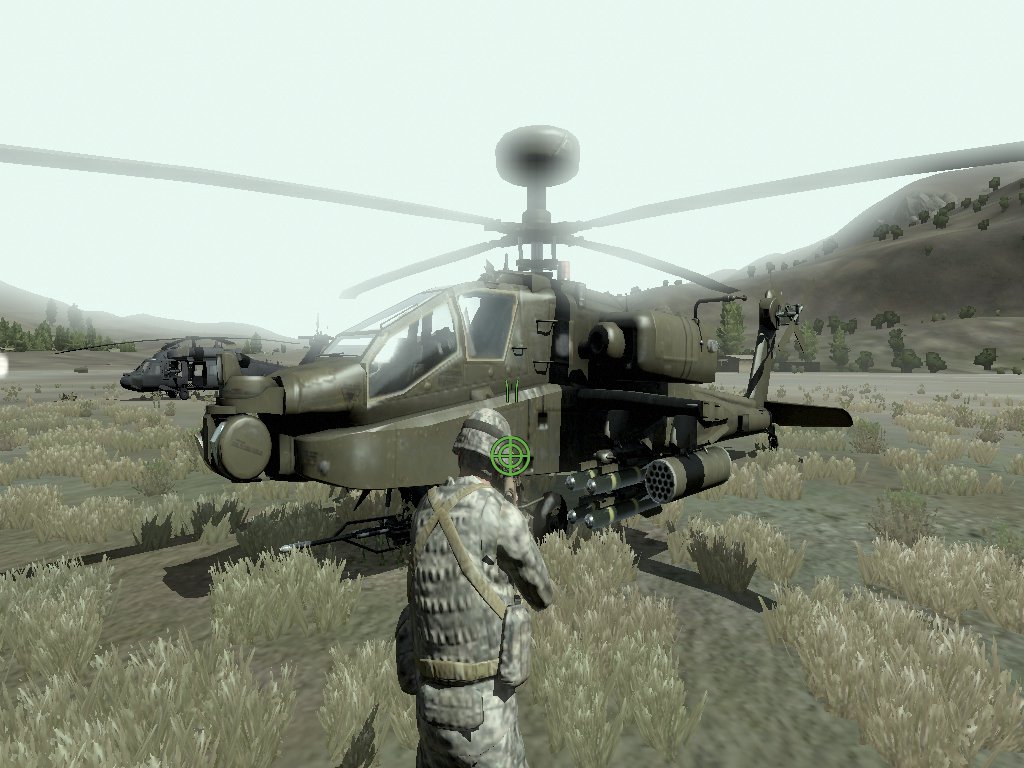
The original ArmA II set the player in the shoes of USMC Force Recon team Razor, utilizing all of the best weapons and vehicles that the USMC has to offer. Operation Arrowhead takes place from the perspective of the US Army, complete with all of the proper weapons, vehicles and technology. While ArmA II featured the USMC Super Cobra helicopter, Operation Arrowhead sets you into the cockpit of an AH-64D Longbow Apache. ArmA II offered the V-35 USMC variant V/STOL aircraft; Operation Arrowhead features the A-10 Thunderbolt II. Since both branches of the service use the M1A2 Abrams main battle tank, it is also available, right along side the US Army Bradley fighting vehicle and the new high-tech Stryker. There’s also Blackhawks, Chinooks, and Little Birds to fly, and you can man all the NATO, Takistan and Guerilla force vehicles and aircraft provided.
In ArmA II the game takes place in a fictional Czech republic called Chernarus. Operation Arrowhead takes place three years later in a fictional Afghanistan-like environment called Takistan. There’s detailed urban, desert and mountainous terrain, and a new campaign to play through, plus a nice variety of single missions.
A feature I really enjoy is the Armory. In the Armory single missions you can select any of the different weapons, vehicles, aircraft types, gear—even a goat—and take them for a spin. However, you’re stuck with whatever you’re given to start with, and you have to earn your way to unlock the next mission, via completing challenges along the way. There are also a variety of actual training missions under the Boot Camp option, but Armory is so much more fun if you want to learn on your own.
The game itself is quite challenging. The run-and-gun tactics that work well in most other military shooter games just don’t work here. While in most cases it takes more than a single shot to kill you, there are many instances where one good shot will put you down—frustrating to say the least. This game is truly more a tactical simulation than game. It rewards you for using real world tactics. As you progress through the game, you move up in rank, and before you know it you’ll be in command of more troops.
There’s an extremely complex messaging system from which you can control your troops. This takes a lot of getting use to, if you want to get the most out of the single-player experience. The High Command interface has a learning curve for sure, but with it you can controls units of tanks and ground troops to coordinate precise attacks. There are even new UAVs to scout around with, and an all-new, white-and-gray thermal imaging system that’s based on the very latest military technology.
The game’s developers also make a military-grade game engine called VBS2, and ArmA II: Operation Arrowhead is based off of it. VBS2 is sold to military forces to create their own virtual battlefields for training troops. Technically, Operation Arrowhead and the original ArmA II are as close as you can get to a military-grade virtual combat simulation.
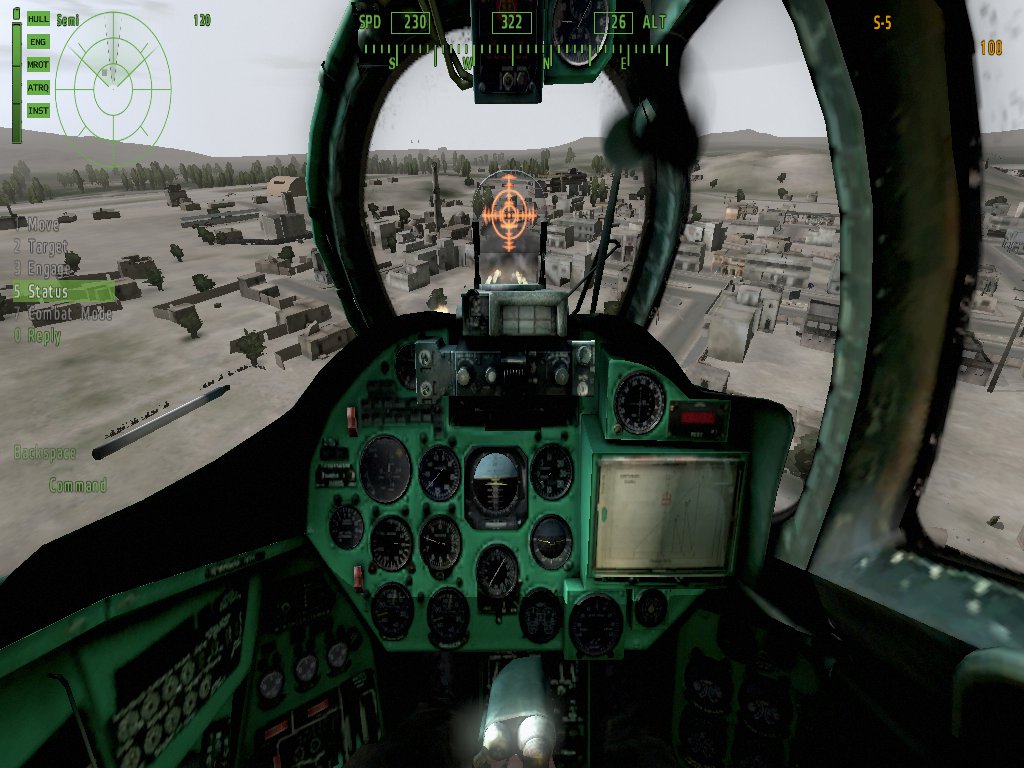
Things like ballistics and penetrating power are somewhat realistically modeled, and the entire environment is pretty much destructible. However, the aircraft flight modeling and vehicles aren’t realistic, but that keeps things simple enough that you can usually jump in and man them. Make no mistake, though, flying a helicopter will take practice, because while not realistically modeled, choppers do feel like they have a believable relaxed-flight model, and rotor-craft are a completely different animal than flying the A-10 or Su25 Frogfoot fixed-wing offerings. Tanks and the other armored vehicles are a lot of fun to man too, and are fairly easy to learn.
The nice thing about this game is you feel like you’re just a small part of the bigger picture, because with or without your input the war wages on. There are multiple missions going on in the same mission while you’re completing your own. One takes place at an airfield, and while my mission was to secure the area, I could also see other troops, vehicles and aircraft doing their thing on the other side of the airfield. The multiple-objective missions are great fun too. Actually, all of the missions are great fun, and many have unique scripted surprises in store for you as you progress through them.
Graphically speaking, this is a gorgeous game. The only problem is, I don’t think there’s a computer available today that can run it smoothly with all of the options maxed. It gets pretty choppy in towns and densely populated areas, and the only way I was able to get an acceptable frame rate was to stick with 1024×768 resolution and crank some of the options down to low and medium settings on a Quad-Core-based AMD Phenom system with 8GB of RAM and an Nvidia 9500 video card.
Granted, that’s not top-of-the-line specs by today’s standards, but I can run pretty much everything else nicely; ArmA II and Operation Arrowhead both push it to the limit. The publisher claims Operation Arrowhead was optimized for better performance than ArmA II, but I’m not seeing it. On my second machine, which is an Intel Dual Core system with 4GB of memory and an Nvidia 7950 Ultra video card, 800×600 with lower details is the best I could do to get it to run with an acceptable level of performance. Fortunately, even at the lower detail settings it still looks really good.
As good as these elements are, multiplayer is where this game really comes to life. It works great over the Internet, and options are provided for cooperative play, deathmatch, and various other unique modes of play. Personally, I find co-op to be the most fun. When playing in co-op mode, you can play the same mission from different perspectives, based on completely different objectives. My objective may be to secure the area, while my friend can join me on the same mission and be in command of his own little team with a completely different mission objective. Once I complete my objective, another might appear, or I can choose to help my friend complete his. There’s a huge community following for this, with a boatload of modifications and player-created content to extend the experience. With the included mission editor you can also create your own new content.
ArmA II: Operation Arrowhead isn’t perfect. Many of of the problems that plagued ArmA II have carried over into Arrowhead. For instance, the AI isn’t very smart. Supposedly, it’s an unscripted and dynamic AI that will react to situations; well, that’s partially true. AI enemies are challenging and for the most part they’re crack shots, but you’ll also catch them doing very stupid things. Don’t get me started on the AI vehicle drivers. The campaign is also rather short, but the mission editor, multiplayer options, and the player-created mods available for free more than make up for this.
The frame rate on solid gaming rigs leaves a lot to be desired too, but it looks great even at lower details. Operation Arrowhead also integrates nicely with an ArmA II install and updates ArmA II with many fixes and improvements. The nice thing is, you’re not required to have ArmA II to play Operation Arrowhead; it’s a totally stand-alone expansion. Although after you play through it ,though, you’ll want ArmA II just to get all the vehicles, aircraft and technology it has to offer. The fact is, the ArmA experience is addictive. Once you’ve played a realistic tactical shooter like this, you’ll want more.
If you want it all, there’s the ArmA II: Combined Operations pack, which includes both the original ArmA II and Operation Arrowhead. Considering Operation Arrowhead costs $39.99, spending $10 more for the Combined Operations pack just makes sense if you don’t have the original.
Even with its little quirks, Operation Arrowhead is the kind of game that ticks you off, but you keep coming back for more, because it is a challenge, most importantly, it’s great fun for hours on end. It’s the kind of game that needs to be understood to be appreciated properly, and those who love it, love it unconditionally. It’s a unique breed.
Armchair General Rating: 86%
About the Author:
Rod White is a veteran writer with almost two decades’ experience covering games, hardware, military aviation and combat simulations for the PC, as well as diecast collectibles and various tabletop miniatures war games. Formerly co-founder and owner of PC Multimedia & Entertainment Magazine, one of the Internet’s first true online gaming publications to cover PC games, simulations and hardware, he also hosted the ground-breaking RealVideo/RealAudio show called CombatReporterLive! for the AllGamesNetwork/Pseudo, Inc.


I have NOT played this particular game.
However, I work with Bohemia Interactive’s Virtual Battlespace 2 (VBS2) on a daily basis. VBS2 and Arma share a common lineage. I don’t know that Arma II is like, but I just want to comment that being like a “military grade simulation” is not necessarily a good thing. (VBS2 is – at least from the scenario developer side of things – extremely frustrating to work with. AI in VBS2 is weak, documentation for scripting is incomplete.)
However, if this is better, then maybe future editions of VBS will address its current shortcomings. (Or so I optimistically hope.)